Exactly How to Incorporate Games right into Your Dog Training Regimen
Essential Tips for Successful Dog Training: A Guide for Family Pet Owners
Reliable pet training is a multifaceted procedure that requires a critical approach tailored to both the pet's temperament and the owner's goals. Secret elements such as developing constant commands, using favorable support, and helping with early socialization play critical duties in fostering a well-adjusted canine companion. However, many family pet owners come across difficulties that can hinder development, causing frustration and uncertainty. Understanding just how to navigate these challenges can substantially enhance the training experience, inevitably transforming the relationship in between proprietor and pet. What are the crucial techniques that can be employed to guarantee success in this venture?
Understanding Canine Habits
Recognizing dog habits is vital for effective training and fostering a harmonious partnership in between pooches and their owners. Canines communicate mostly via body language, articulations, and actions, making it important for proprietors to translate these signals accurately. Acknowledging a pet dog's posture, tail setting, and ear positioning can supply understandings right into its emotion. As an example, a wagging tail does not constantly show happiness; it can likewise signal excitement or anxiousness.

Socialization plays a substantial duty in dog actions; direct exposure to different settings, people, and other animals can substantially influence a canine's character. Furthermore, aspects such as breed features and individual personality ought to lead training techniques, as some breeds may have particular behavioral qualities that require tailored approaches. By comprehending these components, owners can produce an encouraging environment that motivates favorable actions, bring about effective training end results and a deeper bond with their family pets.
Establishing Consistent Commands
Reliable communication with your dog begins with developing consistent commands. This fundamental element of training is vital for cultivating understanding between you and your animal. Consistency in the commands you use makes sure that your dog can dependably associate details words or expressions with the wanted habits.
When choosing commands, choose clear, distinct words that are simple to set apart and claim from one an additional. Prevent using similar-sounding commands that might perplex your pet dog. Utilizing "sit" and "remain" is suitable, yet "rest" and "hit" could lead to misunderstandings.
In addition, preserve the same tone and quantity for every command. Dogs are delicate to singing hints, so differing your tone can produce confusion.
It is equally vital to make sure that all relative are on the very same web page concerning the commands made use of. A united front in command usage will prevent mixed signals and reinforce the knowing procedure.
Positive Reinforcement Strategies
The power of positive reinforcement in pet dog training depends on its capability to urge desired habits via incentives and praise. This technique is based in the concept that actions complied with by beneficial results are more probable to be repeated. By including favorable support into your training program, you can successfully shape your pet dog's actions in a positive fashion.
To carry out favorable support, it's see page essential to recognize what inspires your canine, whether it be treats, toys, or verbal praise. When your dog executes a preferred action, such as resting on command, immediately award them with a treat or love. This association between the command and the positive end result reinforces their understanding.
It's crucial to timing the benefits appropriately; supplying the support within secs of the desired actions assists your pet dog make the connection (dog training). In addition, consistency is key-- guarantee that all relative utilize the very same commands and reward systems to avoid confusion
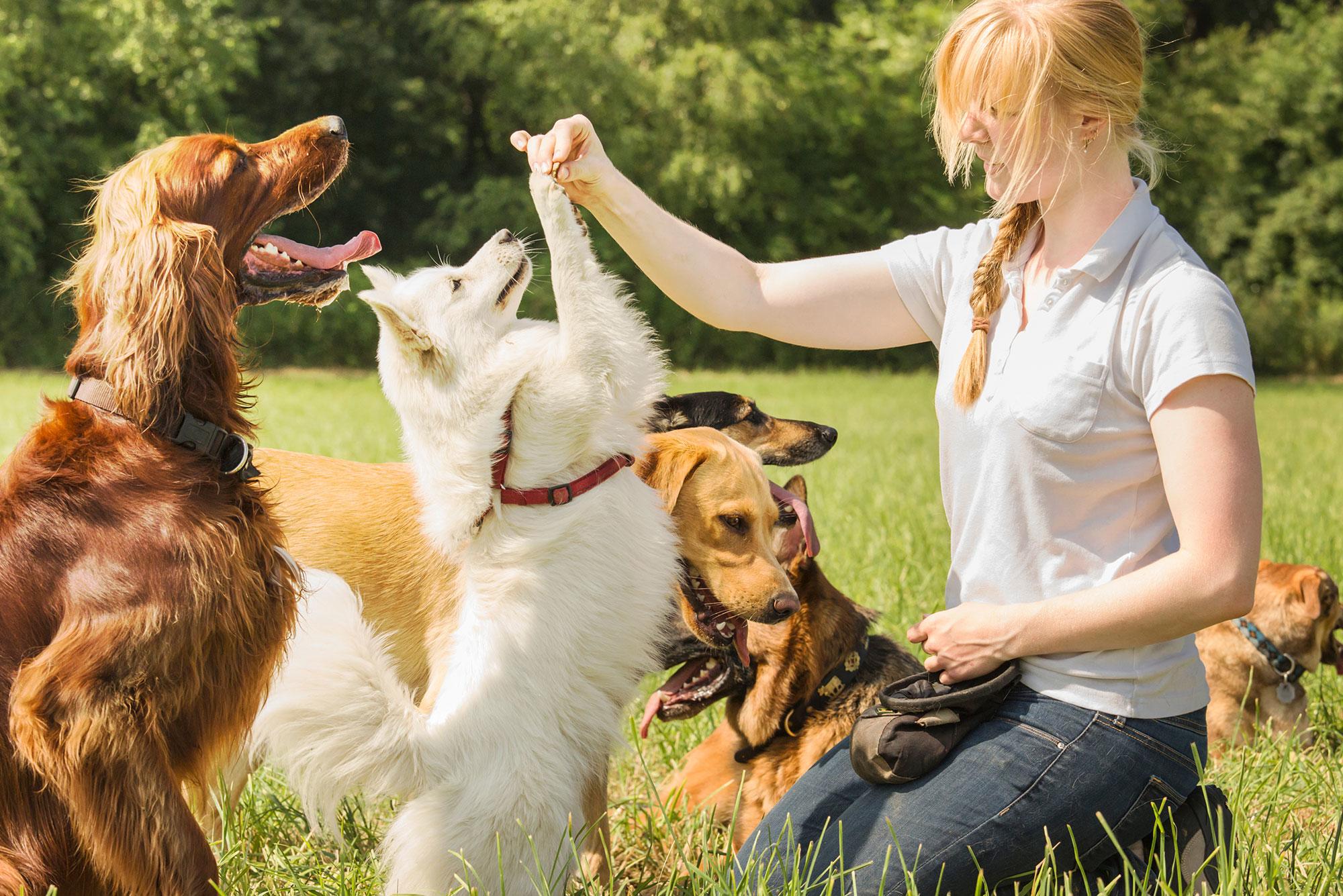
Gradually, you can minimize the regularity of deals with as your dog finds out the behavior, transitioning to applaud or intermittent rewards. This technique not only fosters a solid bond between you and your pet but additionally advertises a positive knowing setting, making training a delightful experience for both.
Socialization and Interaction
Consistently revealing your dog to a selection of environments, people, and various other animals is essential for their social development. Socializing ought to start early, preferably during the important window of 3 to 14 weeks, when puppies are most receptive to new experiences. However, older dogs can also gain from continuous socialization efforts.
Introduce your canine to different setups, such as parks, pet-friendly shops, and metropolitan areas. This direct exposure assists them adapt to various stimulations, minimizing anxiousness and fear feedbacks. Encourage positive communications with other dogs and people, making certain that these encounters are regulated and safe to promote confidence.
Utilize structured playdates with genteel pets, as this can enhance your canine's social abilities and instruct them suitable behavior. Obedience courses and training sessions also provide exceptional chances for socializing, allowing your canine to interact here with others in a monitored environment.
Screen your pet's body movement throughout interactions, as this will aid you assess their comfort level. Slowly increase direct exposure to more difficult situations while guaranteeing that each experience is positive. A well-socialized pet dog is most likely to exhibit well balanced habits, making them a delight to have in any setup.
Addressing Common Training Difficulties
Every pet proprietor will certainly encounter training obstacles eventually, regardless of their pet's age or socializing degree. Recognizing common problems such as stubbornness, distractions, and terror can help in developing efficient strategies for enhancement.

Interruptions during training sessions can thwart focus. To battle this, begin training in a silent environment with very little stimulations. Gradually present distractions as the canine comes to be more efficient in commands. Short, regular training sessions are also efficient in maintaining interest.
Fearfulness can hinder a dog's learning procedure. Gradual desensitization to the resource of worry, coupled with favorable support, can assist reduce anxiousness. Perseverance is important; never ever compel a canine right into a situation that causes distress, as this may worsen the concern.
Ultimately, understanding and dealing with these common difficulties with a structured approach will certainly foster a much more effective training experience, reinforcing the bond in between dog and proprietor while promoting reliable knowing.
Verdict
In recap, successful pet dog training depends on a comprehensive understanding of canine behavior, the establishment of consistent commands, and the application of favorable support methods. Socialization plays an essential function in developing well-adjusted pets, while dealing with common training difficulties calls for persistence and versatility. By implementing these vital approaches, family pet owners can cultivate a strong bond with their dogs and promote preferable actions, ultimately leading to a harmonious connection in between humans and their canine friends.
Comprehending dog behavior is vital for efficient training and fostering a harmonious partnership between canines and their proprietors.Socialization plays a considerable function in pet habits; direct exposure to numerous atmospheres, people, and other animals can significantly influence a canine's character.The power of positive support in pet dog training lies in its capacity to urge preferred behaviors through rewards and appreciation. By including favorable support right into your training regimen, you can efficiently shape your canine's actions in a useful manner.
In summary, effective canine training counts on a thorough understanding of canine habits, the establishment of regular commands, and the application of favorable support methods.